
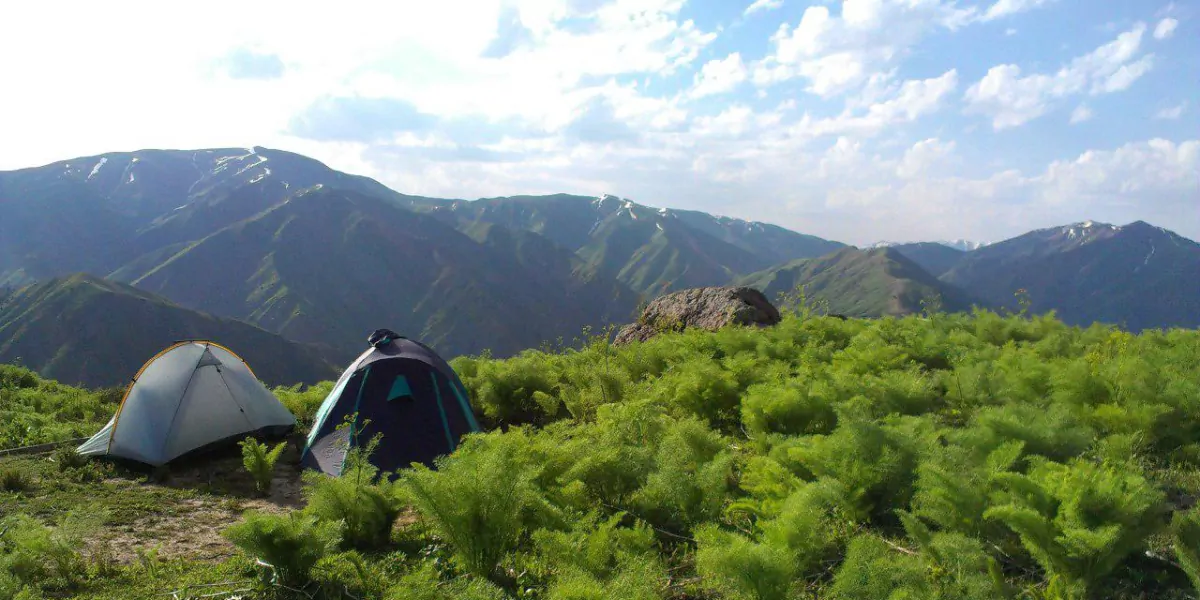
The Pamir Highway winding through high mountains

Ohalik Experiences

Samarkand to the Pamir Highway

Samarkand across the Fann Mountains and down the Pamir Highway.

A 20-day small-group journey to the roof of the world Uzbekistan · Tajikistan

About this journey

This is a journey for people who want to see this part of the world the way we do — from the ground, at the speed of a village, in the company of the people who live there. From Samarkand across the Fann Mountains, down the full length of the Pamir Highway, through the Wakhan Corridor and into the Bartang Valley: passes above 4,600 metres, hot springs named after saints, six thousand petroglyphs, and homestays where hospitality is older than commerce. The food is honest. The roads are not always roads. The stars are unreasonable. Two to eight travellers, mixed comfort, late May to early June. This is not a luxury trip. It is a real one.

The journey, day by day

Day 1 — Samarkand: Arrival

The Silk Road begins here. It always did. Settle into Amira, our own house in the Namozgoh mahalla, then walk the city at its own pace: the Registan, Bibi Khanum, Shah-i-Zinda's corridor of blue, and Siyob Bazaar, where Samarkand is most itself — not a monument but a market that has never stopped trading. A welcome dinner at a family table sets the tone for three weeks.

At a glance

Day 2 — Across the Border to the Seven Lakes

Cross into Tajikistan; climb into the Fann Mountains; seven lakes in a row. Through ancient Panjakent, where Sogdian merchants traded silk for horses, then up the Shing valley as the Haftkul appear one after another like turquoise beads on a string — each a different colour, each with its own story. An afternoon hike between the upper lakes, then a family homestay and whatever the family cooked today.

At a glance

Day 3 — Voru and Gazza: Villages Out of Time

Walking through villages where the twenty-first century has not fully arrived. Voru's stone houses and walnut orchards first, irrigation channels running the same water since before Timur was born — the pace is Ohalik pace: not to cover ground, but to notice it. Tea in a courtyard, talk of the harvest and the children who left. Then deeper into the range, to Gazza.

At a glance

Day 4 — Artuch and the Hike to Kuli Kalon

Into the heart of the Fann Mountains: a cirque of alpine lakes at 2,800 metres. The trail climbs through juniper and open meadow to not one lake but a scatter of them, each a different blue-green, held beneath the 5,400-metre Chimtarga massif. Picnic in total silence — marmots whistling on the scree, shepherds passing with their flocks. The stars tonight are already extraordinary, and we have not yet reached the Pamir.

At a glance

Day 5 — Iskandarkul, then Down to Dushanbe

Alexander's lake, the Anzob Pass, and the capital by evening. Legend says one of Alexander's horses drowned here and gave the lake its name; the truth is more geological and the legend more useful. A short hike to the waterfall locals call the Fann Niagara — glacial water, a blue no camera holds — then the long descent south. A hotel, a proper bed.

At a glance

Day 6 — Dushanbe: A Breath Before the Pamir

Monday's market town became a capital — dushanbe is Persian for Monday, and the name held. A slower day: the National Museum, the Navruz Palace teahouse that became too extravagant to remain one, Rudaki Park, and the golden Somoni. Also the practical day: laundry, gear check, last purchases. Tomorrow the road turns south, and everything after belongs to the mountains.

At a glance

Day 7 — Dushanbe to Kalai Khumb

The Panj River appears, Afghanistan is on the opposite bank, and the Pamir begins. Past the Nurek Reservoir behind one of the tallest dams on earth, lunch in Kulob, then over the Shuraba Pass into geology that has suddenly lost patience. From your window: Afghan villages pressed against the far cliff, footpaths etched into rock, a river utterly indifferent to the politics it divides.

At a glance

Day 8 — Along the Panj to Khorog

The river stays as our guide; across the water, Afghan settlements appear and disappear. Khorog by mid-afternoon — the small, dusty, characterful capital of the Pamir. The bazaar where Afghan traders cross to sell goods and gossip, then the botanical garden high above the valley, snow peaks on all sides, the town laid out below like a map.

At a glance

Day 9 — Into the Wakhan Corridor

Hot springs, the Great Game, and a passage older than any empire. Garm Chashma first — mineral water pouring hot from the earth, making you forget every discomfort of the road — then the Wakhan itself: buffer zone between two empires, Silk Road artery for millennia. Marco Polo claimed to have walked it. Tonight you sleep as close to the Afghan border as you can without crossing it.

At a glance

Day 10 — Ishkashim to Langar: Two Thousand Years in a Day

Fortresses, hot springs, a Buddhist stupa. The third-century Kah Kakha fortress, the clifftop Yamchun with a view that justified every stone, and the Bibi Fatima springs, named for the Prophet's daughter. In Zong, a short hike to a fourth-century Buddhist stupa with the Buddha's footprint in local memory. Langar by evening — a Pamiri guesthouse, the chid skylight framing the stars.

At a glance

Day 11 — Langar Hiking Day: Six Thousand Petroglyphs

Silence as a language. On foot from Langar to a hillside carved with more than six thousand petroglyphs — ibex, hunters, sun symbols, scratched by hands that lived here before any empire or alphabet arrived. Not behind glass: open to the wind, the rain, and your fingers. Then into the gorge below Engels Peak with a picnic no restaurant on earth can compete with.

At a glance

Day 12 — Over Kargushi Pass to Bashgumbez

Crossing 4,300 metres, where the valley greens give way to ochre, rust, and the cold blue of altitude. The still lakes of Yashikul and Bulunkul, lunch in the coldest inhabited village in Tajikistan — a simplicity that is not poverty but adaptation, refined over centuries — and a homestay at four thousand metres, where hospitality is survival made generous.

At a glance

Day 13 — The Median Valley and the Kyrgyz Nomads

Kumis and conversation without a shared language. A morning hike into the wind-scoured Median Valley to visit Kyrgyz nomad families summering with their herds — among the last truly nomadic people in Central Asia. Our team knows these families; we come as guests, not as tourists. In the afternoon, Murghab: a frontier town of a few thousand people, surrounded by nothing but sky and stone.

At a glance

Day 14 — Ak Baital Pass and Karakul Lake

The highest point of the Pamir Highway: 4,655 metres, the air thin, the light sharp, the landscape stripped of everything except itself. An optional morning hike in the Pshart Valley, then the descent to Karakul — a saline lake in a meteorite crater at 3,914 metres, shifting turquoise to slate to ink, with China's 7,000-metre Muztagh Ata visible across the water on a clear day.

At a glance

Day 15 — Into the Bartang Valley

One of the most remote inhabited valleys on earth. Over Kok Jar Pass and down along the Tanimas River — expedition driving, on a road the mountain keeps trying to reclaim, with drivers who know every landslide scar and river crossing by name. Sawnob by evening: a simple homestay, generous hosts, and a valley that has barely changed in centuries.

At a glance

Day 16 — Hike into the Jizev Valley

A two-hour walk into a hidden world. Through Rowshorv, a village that is less a settlement than a statement of human persistence, then on foot up a narrow gorge that opens gradually into wildflowers, turquoise streams, and peaks on every horizon. No phone signal, no internet, no distractions in Jizev tonight — the family hosting you does it because hospitality here is older than commerce.

At a glance

Day 17 — Jizev: A Day with Nowhere to Be

No vehicle, no road, no agenda beyond being present. A morning with the villagers, whose quiet resilience has outlasted every empire that ever claimed this territory; an optional hike to a mountain lake in a high cirque for those with the energy. The evening conversations here are the ones you will still be retelling in ten years.

At a glance

Day 18 — Out of Jizev, Back to Kalai Khumb

Hike out, rejoin the highway, and watch the Panj differently. The short trek back to the bridge is a farewell to the valley; the drive via Rushan retraces the border river, and every cliff and Afghan village across the water now carries the weight of three weeks of experience. The river is the same. You are not. A hot shower tonight feels like a luxury earned.

At a glance

Day 19 — The Northern Road to Dushanbe

Back to the capital via Tavildara — new valleys, new landscapes, and the slow re-entry into a world with traffic lights and mobile signal. In the evening, the farewell dinner: three weeks of shared road, shared discomfort, shared wonder, and the particular friendship of people who now share a geography no one else in their lives will fully understand.

At a glance

Day 20 — Departure

Early transfer to Dushanbe airport for flights via Istanbul or Dubai. The Pamir stays with you — in your legs, in your photographs, and in the kind of silence you will find yourself searching for in every city you return to.

At a glance

Come With Us

Begin this journey

Write to us with your dates and what most draws you, and we will write back, by hand, within two working days.

Write to info@ohalik.com Let's connect

Let's Connect

Pick a time that suits you — you'll be talking with Samir, who has driven, walked, and slept on every route we sell.