
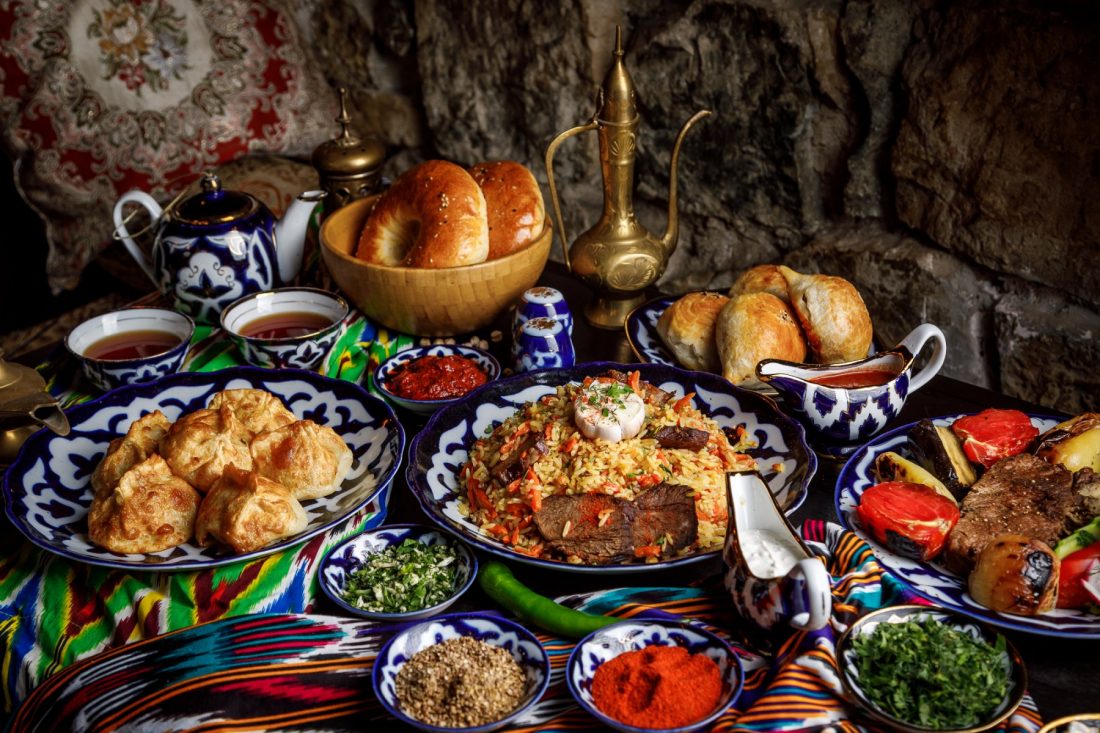
An Uzbek table set with plov, somsa, bread, and tea

Ohalik Experiences

Culinary Journeys

The table is the oldest classroom.

A 10-day journey through Uzbekistan's kitchens, hands, and markets Tashkent · Fergana Valley · Bukhara · Samarkand

About this journey

In our part of the world, food is not entertainment. Food is how we keep each other. The bread we tear at the start of the meal is the same shape, more or less, as the bread our great-grandmothers tore. The osh we eat at weddings, at funerals, and at the welcoming of guests is a chemistry our grandfathers learned from their grandfathers. We do not have a word for foodie. We have a word for guest, and the guest is fed.

A culinary journey with Ohalik is therefore not a tour of restaurants. We do not eat where the buses stop. We cook with the women who taught us. We sit on the floor in the homes of our friends. We go to the markets at six in the morning, when the bread is still hot and the herbs still smell of the field. We work in real bakeries, beside real bakers. We pull lagman noodles in the kitchen of a Bukharian chef. We help shop the morning's market for the afternoon's plov.

You will eat well. You will eat too much. You will be sent home with recipes written by hand on pieces of paper folded into your passport.

What we cover

Plov in three of its regional voices: Tashkent's communal-cauldron style, Fergana's family kitchen, and Samarkand's open-flame courtyard. Each has a different cut of carrot, a different rice, a different argument. The bread cultures of the Fergana Valley and Samarkand, which are not the same bread, slapped against the inner wall of a tandyr you have helped light. Kechiri, an old slow-cooked recipe of the valley that has all but disappeared from the city restaurants. Hand-pulled lagman, drawn out in a single breath. Bukharian halva, poured warm into copper trays. The cold eggplant salad of Tashkent's home kitchens. Fresh pastries from a village table. And, beside the food, the silk and the ceramics that grew up in the same valleys, in the same hands.

The journey, day by day

Day 1 · Tashkent

Arrival. Transfer to the hotel for a freshen-up. A gentle walking tour of the city's old quarters in the late morning, easing the legs after the flight. Late lunch at the Central Asian Plov Centre on Iftikhor Street, where six wide cauldrons cook the morning's plov in turn and a queue of office workers, grandmothers, and families wait their portion. We eat at the long communal tables, the way the city eats. The rest of the day is for slowing down: a nap, a tea on the hotel terrace, an early dinner.

The first slow breath after a long flight.

Day 2 · Tashkent to the Fergana Valley, by way of Kokand

Morning train east through the Kamchik Pass into the Fergana Valley, the green basin that grows half the country's wheat, cotton, and silk. We are received in Kokand at the home of Hasan Umarov and his wife. Hasan is a master blacksmith whose work is known across Central Asia. We spend the morning in their kitchen, preparing kechiri together, an old, slow-cooked recipe of the valley that has all but disappeared from the city restaurants. We eat lunch with them at the family table. In the afternoon, Hasan opens his forge: he works at the anvil for us, then puts the hammer in our hands so we know what the iron asks of the shoulder. Late afternoon visit to Khudayar Khan's Palace, the last great residence of the Kokand Khanate, with its painted ceilings and ganch-carved walls. Evening drive on to Fergana city for the night.

The hands that fold the dough and the hands that beat the iron, at the same hearth.

Day 3 · Margilan

Morning at Kumtepa bazaar, the great market of the valley, where the silk traders, the herbalists, the spice-sellers, and the bread bakers spread their goods over more than a hectare. We spend a slow hour in the food rows, learning the herbs and the cuts of meat from a cook who shops here twice a week.

Afterwards we walk to the workshop of master Sobir, who shows us silk-making from the cocoon to the finished bolt: the boiling, the unwinding, the dyeing in natural pigments, the loom. In the afternoon we move on to a working neighbourhood bakery, where we mix our own dough and learn to bake the Fergana-style non, slapped against the inner wall of the tandyr. The bread we bake is the dinner.

The cocoon and the loaf, made in the same neighbourhood.

Day 4 · Rishtan, then back to Tashkent

Morning visit to the ceramic school in Rishtan, where the red clay of the surrounding hills has been turned for centuries and the cobalt-blue glaze is made from a recipe the masters keep among themselves. We meet the artists at their wheels and hold a finished plate, still warm from the kiln, in our hands.

After lunch we drive west across the Kamchik Pass back to Tashkent. A slower evening: a cooking class in the kitchen of a local woman who teaches us the city's cold eggplant salad, with tomato, garlic, coriander, and the right vinegar, served with bread. A quiet dinner together at her table.

The cobalt under the glaze and the woman in her kitchen, in the same day.

Day 5 · Tashkent to Bukhara, with hand-pulled lagman

Morning high-speed train across the country to Bukhara. Afternoon walking tour of the old city: the Ark fortress, the Bolo-Hauz mosque, and the trading domes where the silk merchants, the jewellers, and the hat-makers have kept their stalls for five hundred years.

In the evening we meet our friend the Bukharian chef, who teaches us hand-pulled lagman: the dough rested overnight, drawn out into a single noodle without a knife, the broth simmered for hours with lamb shank, the vegetables cut into ribbons. We pull the noodles ourselves. We cook them. We eat them together.

The noodle drawn out in a single breath, like the road from Tashkent.

Day 6 · Bukhara

A full day at the pace the city deserves. Dawn at Lyabi-Hauz before the bazaar wakes. Poi Kalon ensemble at the soft hour, when the bricks turn the colour of bread crust. Lunch with a calligrapher's family in the old quarter. A short stop at the house of the city's halva maker, where the white halva is poured warm into copper trays and cut on the stone slab his grandfather cut on.

The evening is yours. Forget the calendar. Sit under the chinor tree at Lyabi-Hauz. Let Bukhara's old air do its slow work.

The city that does not need you to hurry.

Day 7 · Bukhara to Samarkand

A free morning in Bukhara: a coffee, a hammam if you like, one more wander through the trading domes for the silk or the silverwork. Lunch on your own or with the guide. Late afternoon high-speed train to Samarkand. Evening arrival, settling in at our family hotel.

The city you leave with a recipe folded into your passport.

Day 8 · Samarkand, with the plov of the open flame

The Registan in the morning, when the light is still cold. Bibi-Khanym mosque mid-morning. From there we walk into Siyob bazaar with a local family who cook for a living, and we shop together for the afternoon's plov: the devzira rice, the lamb shoulder, the long matchstick of yellow and orange carrot, the cumin, the chickpeas, the dried barberries.

In the afternoon we cook the Samarkand-style plov from start to finish in their courtyard, over the open flame in the kazan. The plov is the evening meal, eaten at the long table on the platform. We finish the day with a slow walk through the lit city.

The plov from the market basket to the open flame to the table.

Day 9 · Ohalik Village

We drive thirty minutes out of the city to Ohalik, the village that gave our company its name. A gentle morning walk along the lanes and gardens, with the village children running ahead. Then to the kitchen of Mahbuba, who is preparing fresh pastries with her daughters: somsa folded with lamb and onion, qatlama layered with butter, and the morning's patir. We knead the dough on the wooden board on the floor. We fold, we shape, we light the tandyr with grapevine cuttings the way her mother taught her.

Lunch is everything we have made together. We return to Samarkand in the afternoon. The evening is at leisure.

The village we are named for, and the table it sets for us.

Day 10 · Samarkand

Farewell breakfast in the courtyard at Amira Boutique Hotel. Transfer to the airport for travellers flying from Samarkand, or to the high-speed train for those continuing to Tashkent.

A goodbye that is not a goodbye, because you will come back.

A few practical notes

Group size.Small private parties, typically two to twelve travellers. We will not put strangers at the same family table.

Pace.Moderate. Mornings often start early for the market visits and the cooking days. Afternoons leave time to rest before the evening meal.

Dietary requirements.Vegetarian, halal, kosher-style, gluten-free, and most allergies can be accommodated with advance notice. Tell us at confirmation, in writing, and we will brief every host.

Hotels.Boutique and family-run throughout. In Samarkand, our own Amira Boutique Hotel. In Bukhara, a converted merchant's house in the old city. In Fergana city, the best of the small independents. In Tashkent, a boutique hotel near the old quarter.

Best seasons.Late March through early June, and again September through early November, when the markets are at their best and the courtyards are warm enough to eat in.

Pricing.On request. Quoted per traveller against final group size and season.

To begin.Write to hello@ohalik.com. Tell us when you can travel, how many you are, and which dishes most draw you. We will write back, by hand, within two working days.

Where you stay in Samarkand

We do not just operate journeys — we own and run Amira Boutique Hotel, our family's boutique property in Samarkand. When your journey passes through the city and group size permits, that courtyard is where you sleep, and the farewell breakfast is served at our own table.

Come With Us

Begin this journey

Write to us with your dates and what most draws you, and we will write back, by hand, within two working days.

Let's Connect

Tell us a bit about yourself and pick a time