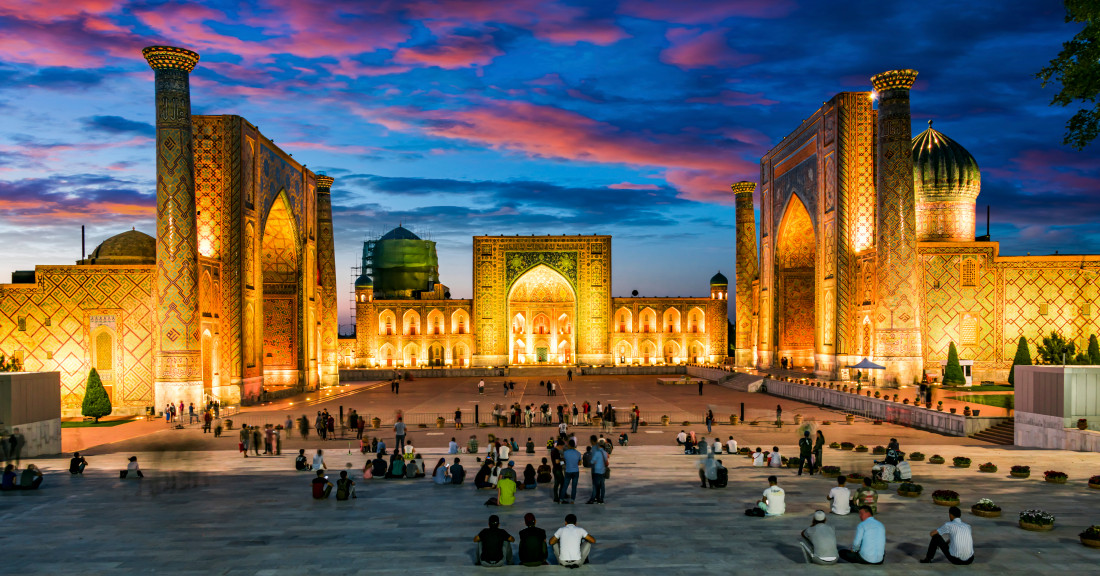
The Registan at blue hour, Samarkand

Ohalik Experiences

Photography Tours

Light, faces, and the patience to wait for both.

An 11-day photography journey across Uzbekistan Tashkent · Khiva · Bukhara · Nurata & Aydar Kul · Samarkand

About this journey

Central Asia is generous to the photographer who is patient. The light here is not the light of the Mediterranean. It is harder, drier, and it does its best work at the edges of the day. The faces here have lived through Soviet collectivisation, independence, civil war, and three economic collapses. They do not give themselves to a quick lens. But they will give themselves to a friend.

Our photography journeys are designed around two things: the right light and the right introductions. We get you to the Registan an hour before the gates officially open. We climb to the watchtower over Ichan-Qala for the skyline shoot when the gold light is on every dome. We arrange a private merchant's house in Bukhara where the morning sun comes through carved wooden shutters in stripes. We bring you to a friend's wedding when the calendar allows, to the livestock market on the edge of Samarkand at dawn, and to a yurt camp at the edge of the Kyzylkum where the camels come down to water at sunset.

We work with photographers of every level, from people who shoot on their phones to working professionals. Our trips have hosted Tom Bourdon's groups, Rimma Schipova, and small parties led by photo editors from European magazines. The pace is unhurried. We allow time for the light to come right. We do not move the group while the photographer is still working.

What we offer

Golden hour access at the main monuments, arranged in advance with the local custodians. Private rooftop access for skyline shoots over Khiva, Bukhara, and Samarkand. Portrait sessions with named locals: bread bakers at their tandyrs, suzani embroiderers at their frames, miniature painters at their tables, ceramic masters at their wheels, village elders in the houses where they were born. Headline experiences when the calendar allows: a friend's wedding in Samarkand or Bukhara, a dawn livestock market, a yurt overnight at Aydar Kul. Cultural events when the season aligns: Navruz, Eid, the harvest in the Fergana Valley.

The journey, day by day

Day 1 · Tashkent

Arrival. Welcome and gear check at the hotel. Evening light at the Khast Imom complex, where the white marble takes a warm tone in the last hour and the courtyard fills with worshippers between the prayers.

The first frame is always the city you just landed in.

Day 2 · Tashkent

Chorsu bazaar at dawn, when the bread comes out, the meat is being broken down, and the herbs are still wet from the wash. Afternoon at the Soviet metro stations, where photography was forbidden until 2018 and each station tells a story of the era in marble, mosaic, and bronze. Evening editing.

The underground gallery that was a state secret.

Day 3 · Tashkent to Khiva

Morning flight to Urgench, transfer to Khiva. Late afternoon walk into Ichan-Qala when the day cools. Sunset shoot from the city walls, looking out across the desert as the bricks turn gold.

The desert city at the hour the photographers wait for.

Day 4 · Khiva, with the rooftop skyline

Dawn shoot inside the Juma Mosque, with the call to prayer above the two hundred and twelve carved wooden columns. Portrait session with a suzani embroiderer who works for the museum. After a long lunch and a rest, we climb to the watchtower above Ichan-Qala for the city's skyline shoot, with private access at the hour the gold light catches every minaret, every dome, and the long flat horizon beyond the walls.

Evening with a dutar player in his courtyard, by lamplight: a low-light portrait session with one of the city's last masters of the old songs.

The walled city seen from above its own roof.

Day 5 · Khiva to Bukhara, across the Kyzylkum

A long drive across the Kyzylkum desert, with stops for landscape work at the open horizon and the long road. Brief pause at the Amul caravanserai ruins. Arrival in Bukhara by evening, into the lamplight of the old town.

The road across the red sand.

Day 6 · Bukhara, with the old merchant's house

Dawn at Poi Kalon, when only the swallows and the cleaners are out. Portrait session with our friend Aziz at his tandyr, hands and dough and the open fire.

Late morning we are received at a private 19th-century merchant's house in the old city, still inhabited by the family that has kept it for four generations. The courtyard is painted in the Bukharian palette of red and gold. The morning sun comes through the carved wooden shutters in stripes across the floor. We work for two hours in the rooms and the gallery.

Late afternoon at Chor-Bakr necropolis, when the sun goes low over the four Sufi sheikhs and the swallows ride the warm air above the domes.

The city that gives its best light to those who wake first.

Day 7 · Bukhara to Nurata and Aydar Kul

Morning drive north out of Bukhara to Nurata, the holy spring town where, by tradition, an arrow of Ali struck the rock and the water came. A short shoot at the spring and the medieval fortress above the town. Continue east to Aydar Kul, the wide lake at the edge of the Kyzylkum, where our friends keep a small yurt camp.

Afternoon with the camel handlers and their herds. Sunset shoot from the high dune, with the dromedaries coming down to water as the light turns and the lake takes the gold off the sky. Supper around the open fire — bread from the camp tandyr, lamb on the spit. Overnight in yurts. The night sky here is the night sky the caravans saw.

The yurt that has been here longer than the road that brought you.

Day 8 · Aydar Kul to Samarkand, with the village portraits

Dawn at the dunes for the cold blue light over the lake, the camels still in shadow, the long horizon turning pink. After breakfast, a portrait session with the families who keep the camp — three generations in one frame, the grandmother's hands, the boy's shy smile, the herder's face that has watched this desert for forty years.

Mid-morning visit to a remote village in the foothills, where the elders keep the old traditions in clothing, embroidery, and song. We work for two hours with their permission and ours, slowly, on portraits and the village's lived spaces. Lunch with them on the platform. Drive on to Samarkand, with arrival by evening.

The face that has watched the desert for forty years.

Day 9 · Samarkand, the wedding morning

When our timing aligns with a friend's wedding — and we work weeks in advance to arrange this whenever possible, in Samarkand or in Bukhara — the morning belongs to the plov-mahala, the dawn plov ritual when hundreds of guests are fed from open cauldrons in the courtyard. The bridegroom's procession arrives in a cloud of steam and song. The women of the bride's family work the kitchen in the old way. We have permission, we have introductions, we have the time and the space the photographer needs.

When the calendar does not allow, the morning is the Registan with private access before the gates open to the public, and Shah-i-Zinda at the hour the mosaics turn from white to blue.

In either case, the afternoon is Ulugbek's Observatory and an editing session at the hotel.

A city that opens its doors to those who know the family.

Day 10 · Samarkand, with the bakery and the livestock market

Pre-dawn start to Siyob bazaar, to the tandyr of the bread baker who has worked this oven for forty years. We shoot the lighting of the tandyr, the slap of the dough against the inner wall, the steam, the bread coming out hot enough to burn the fingers, and the first customers of the morning.

Mid-morning at the livestock market on the edge of the city, where sheep, goats, calves, and the occasional camel change hands among men in chapans and women in floral scarves, in the dust and the noise that have been the dust and the noise of any Central Asian market for a thousand years.

Afternoon at the Bibi-Khanym mosque. Evening at Gur-e-Amir, the mausoleum of Tamerlane, when the dome turns blue against a sky that is still grey.

Bread and beasts and the dome above them.

Day 11 · Samarkand

A slow morning. Farewell breakfast in the courtyard at Amira Boutique Hotel. Transfer to the airport for travellers flying from Samarkand, or to the high-speed train for those continuing to Tashkent.

The last frame and the long flight home.

A few practical notes

Group size.Four to ten photographers, capped to protect portrait access and shooting room at the monuments and in private spaces.

Pace.Early starts most days, often before dawn. Editing time is built into the afternoons. The light dictates the schedule, not the clock.

Gear.Any level. Phones to medium format. Tripods are welcome at the monuments where we have private access. Drones require advance permits and are not always possible — tell us at confirmation if you plan to fly.

Workshops and portraits.All portrait sessions are arranged in writing in advance. We pay our sitters properly. Releases are signed on the spot, in their language.

Wedding access.Weddings happen on their own calendar. We work weeks ahead with our friends and families to align Day 9 with a wedding when possible, in Samarkand or Bukhara. When the timing does not allow, the day becomes the great monuments with private access. We never disturb a wedding without prior welcome from the host family.

Aydar Kul yurts.Simple. Two to four travellers per yurt, with bedding provided. Shared bathroom and shower block. Electricity by generator, with a quiet hour for sleeping. The camp is genuine: the people who keep it have kept it for many years, and the camels are not props.

Hotels.Boutique throughout. In Samarkand, our own Amira Boutique Hotel. In Bukhara, a converted merchant's house in the old city. In Khiva, an old caravanserai inside Ichan-Qala. In Tashkent, a boutique hotel near the old quarter.

Best seasons.Late March to late May for the long green light and the wedding season, and again mid-September to early November for the harvest, the soft afternoon sun, and the cool nights at the yurts.

Pricing.On request. Quoted per traveller against final group size and season.

To begin.Write to hello@ohalik.com. Tell us when you can travel, how many you are, your level honestly, and the kind of work you most want to make. We will write back, by hand, within two working days.

Where you stay in Samarkand

We do not just operate journeys — we own and run Amira Boutique Hotel, our family's boutique property in Samarkand. When your journey passes through the city and group size permits, that courtyard is where you sleep, and the farewell breakfast is served at our own table.

Come With Us

Begin this journey

Write to us with your dates and what most draws you, and we will write back, by hand, within two working days.

Let's Connect

Tell us a bit about yourself and pick a time